
But let's get to the point!
We've been asked countless questions, but the ones we hear or read most often are:
1-Why do I have to change anything if I know my neighbour doesn't care? I can't work miracles alone!
2-Will I be able to reduce my waste?
3-I want to start reducing, but where do I begin?
It will be very difficult to reduce "plastic consumption" to zero and produce zero waste in our homes and lives, but if we analyse the consequences of plastic use, especially disposable plastic, perhaps we can do something!
There has been a lot of talk about waste and its consequences for the environment.
A year's resources are already exhausted! What does this mean? It means it is truly urgent to take action and do something. Talking, saying, and criticising are no longer enough.
It's time to get to work and minimise the impact of our waste on the environment, and for that...
Nothing better than understanding what the 5 R's are
1-Refuse - before anything else, we should refuse what we don't need; you can refuse business cards (take a photo to get the contact), a restaurant straw (bring your own), flyers you won't read, when ordering food you can specify that you don't want disposables, statements and letters you can easily consult online; Decline what you don't need;
2-Rethink - when you think that a certain product or item no longer has value, don't just throw it away; don't discard something that could be useful to your neighbour, or that you can donate or try to give a second home to. Rethink your attitudes towards the planet... and more importantly, you know that when we discard something, we are only sending it somewhere else, because it doesn't disappear from the environment by a miracle, right?
3-Reduce - when you buy food, do you really need 1kg of beans packaged in plastic? You can choose to buy in bulk, only the quantity you need; bring your own bags for fruits and vegetables, and you'll see that it's at least 5 or 6 fewer bags; and now for clothes, do you need more clothes in your wardrobe? Do you really need that item on sale? And wanting to reduce doesn't mean throwing everything out, but rather evaluating what you really need and if we can sell or donate it to someone who will give it new life!
4-Reuse - when you can no longer refuse or reduce a certain product, reuse it as much as possible, and when you have to buy new, buy one that is as durable as possible and compostable or recyclable. For example, use and abuse reusable bottles, prefer stainless steel straws (but only buy them if you use them, otherwise it doesn't make sense), switch from paper napkins to cloth napkins, you can also switch the kitchen roll to a reusable roll; switch to reusable vegetable bags; why not ditch disposable pads and tampons and start using menstrual pants, reusable pads, and a menstrual cup? Give it a try!
5-Recycle - unfortunately, we have reached a point where recycling is no longer enough; the important thing is to reduce waste. It is super important to recycle, but it is always better not to have to recycle because we don't have waste, right? So recycling should really be a last resort, a last option! Right?
In 2023, there are more R's, but today I only want to tell you about one more...
"R" (Rot) COMPOST... it's liberating! We started with vermicomposting at home, then moved house and left the vermicomposter with our dear tenants, who offered to keep it and do something for the planet.
In this slightly larger house, we adopted the "bokashi" composting method. It is undoubtedly the best method of all, for us! It has two phases: the first is in our kitchen (and fridge), the second is in our soil (it's nice to return everything that comes from it, isn't it?).
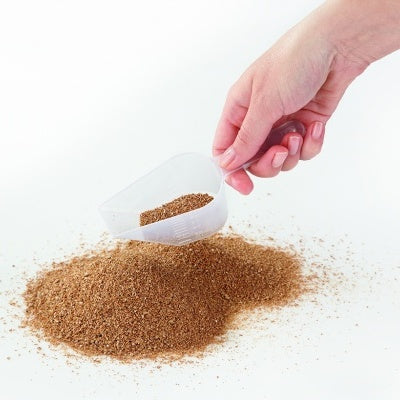
Basically, all the scraps go into the composter, we add the bran and close it.
Before, we had to go to the recycling bins and regular waste every two days... now we go to the recycling bins and waste once a month... now we have more time and the smells have disappeared!
Composting is an act of love for the environment, for yourself, and for others. It is returning to the earth what we harvest, it is having our own fertiliser, our own soil, our own plantations, and our own vegetables! It is being happy!
Be happy too!!! Are you coming?
Text and photography by Marta Lopes